1922–1948 · Origins
Jaguar began in 1922 as a manufacturer of motorcycle sidecars. The company adopted the Jaguar name in 1945 and unveiled the XK120 at Earls Court in London in 1948.
Read more — the origins of the XK series
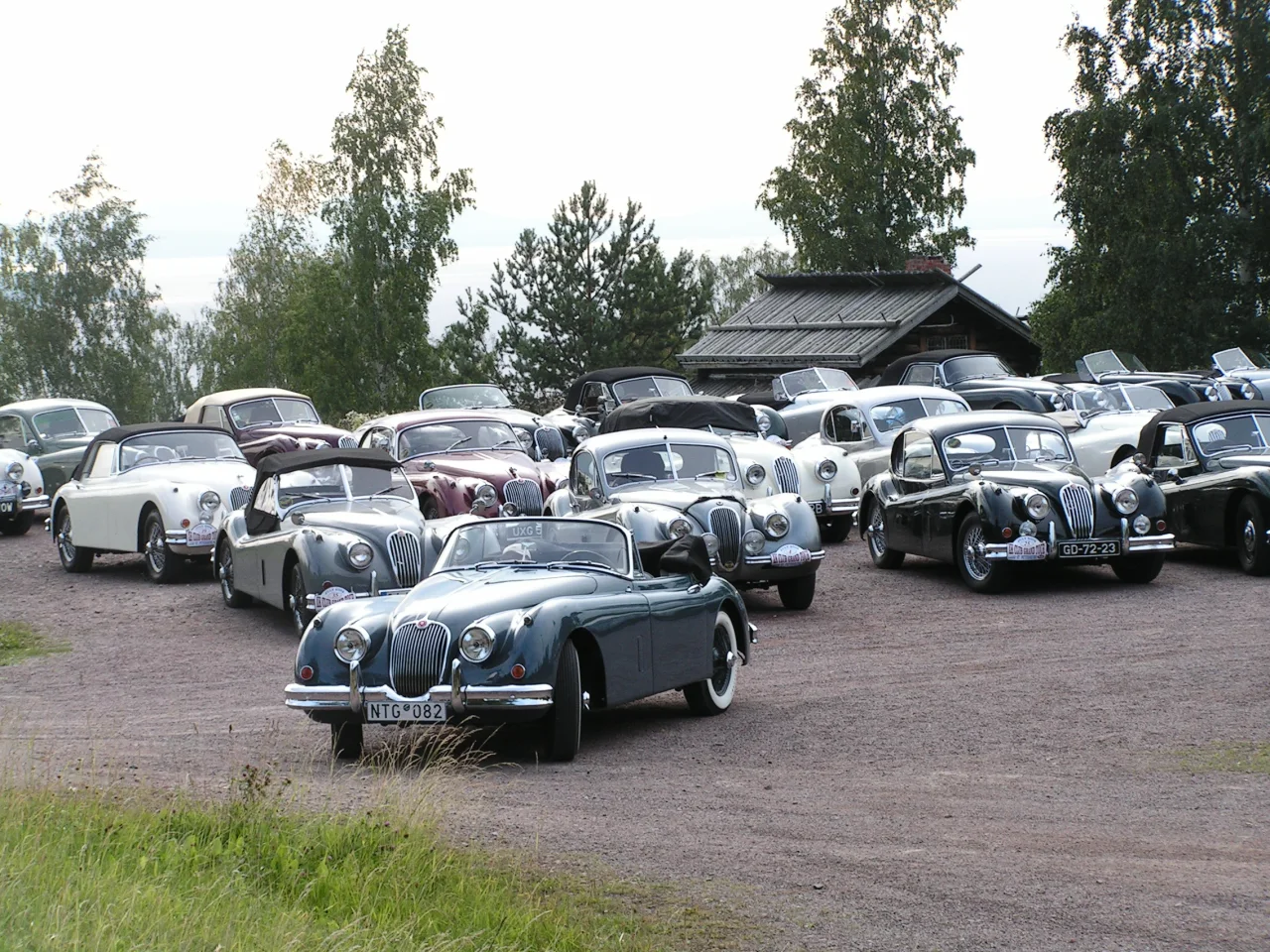
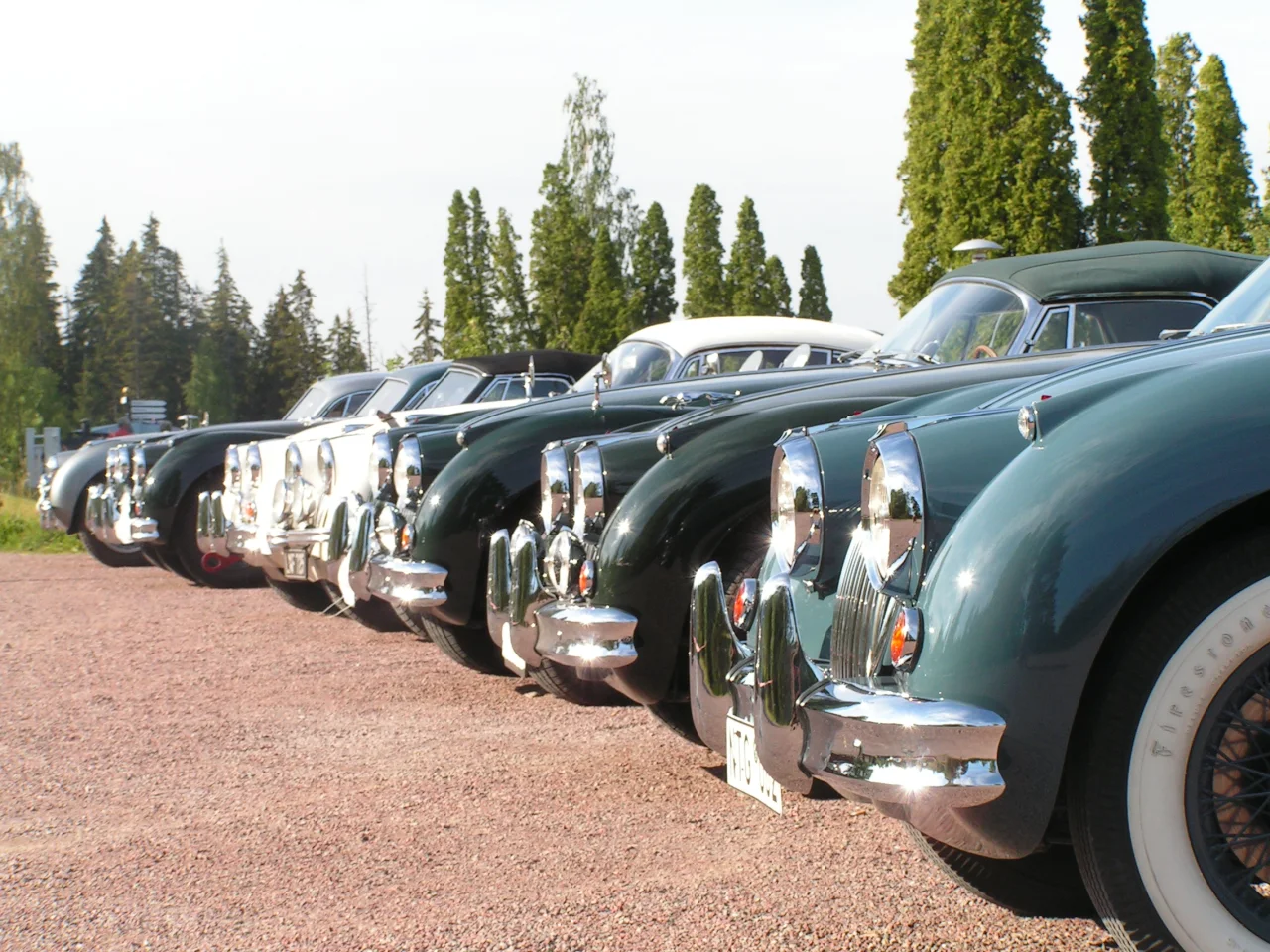
High power, beautiful lines and a modest price: this is how Kent describes the recipe behind the XK series’ appeal. These were cars with character, whose shape and performance were equally important to the experience.
The story began in 1922 with motorcycle sidecars and continued with reworked production bodies on simple chassis. After a little over ten years, increasingly individual cars appeared under the S.S. name. Jaguar was used as a model name as early as 1936; in March 1945 the company became Jaguar Cars Ltd.
In the years after the war, Jaguar, like many British manufacturers, continued with its pre-war designs. At the Earls Court motor show in October 1948, Mark V saloons shared the stand with the open two-seat XK120, which attracted the attention. Its name referred to a top speed of 120 miles per hour.
Kent describes the contrast between the saloons’ separate wings and running boards and the sports car’s flowing lines. The XK120 combined old and new: its front wings swept back past the doors before the line rose over the rear wheels, which were covered by wheel spats, known in America as fender skirts.
The cockpit was edged in leather. The divided windscreen was mounted above the scuttle and could be unbolted, for example for competition use. Beneath the long bonnet sat the XK engine with its twin overhead camshafts.
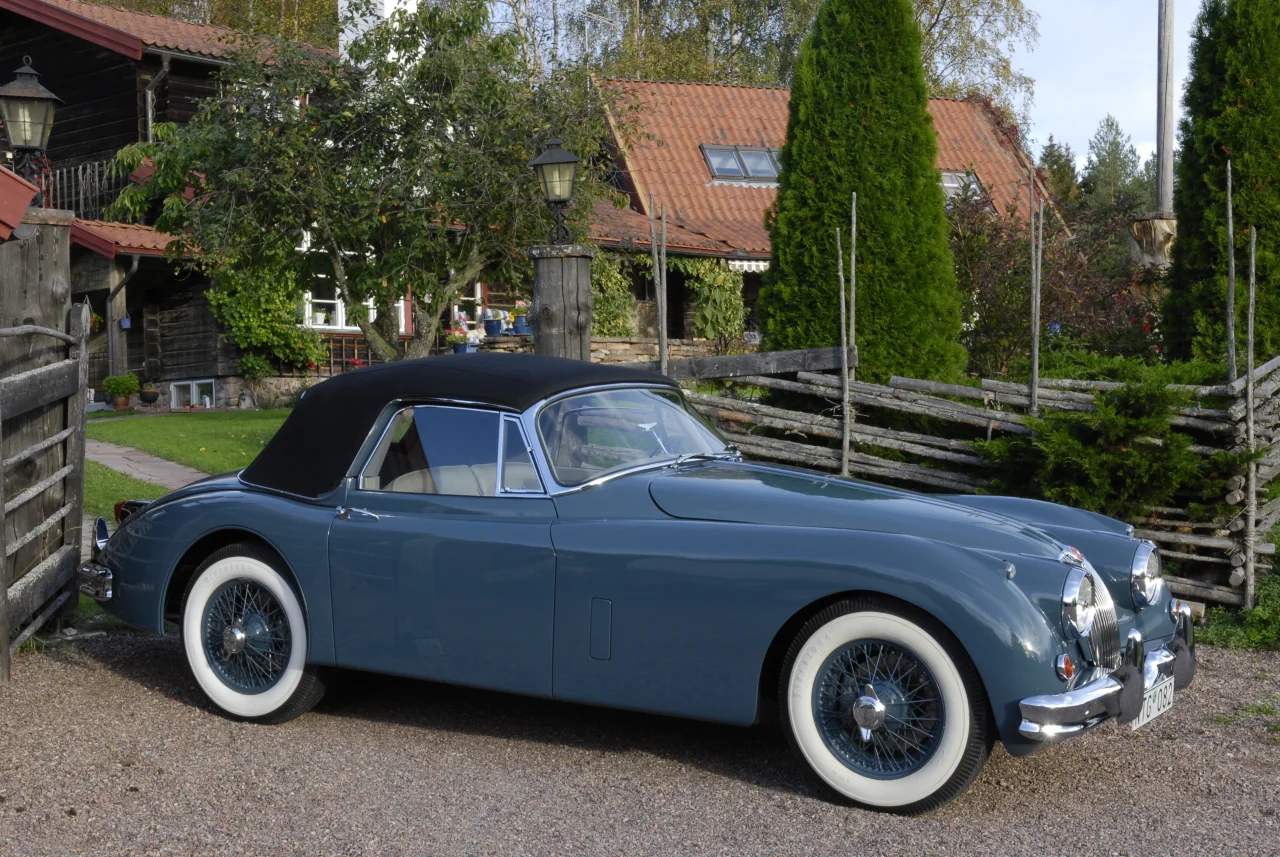
William Lyons’ eye for proportion has a central place in Kent’s account. When the idea for the sports car took shape, the new saloon chassis and XK engine provided the starting point. The body gave the car its individual character. The XK150 would become the third and final series in the XK family.